
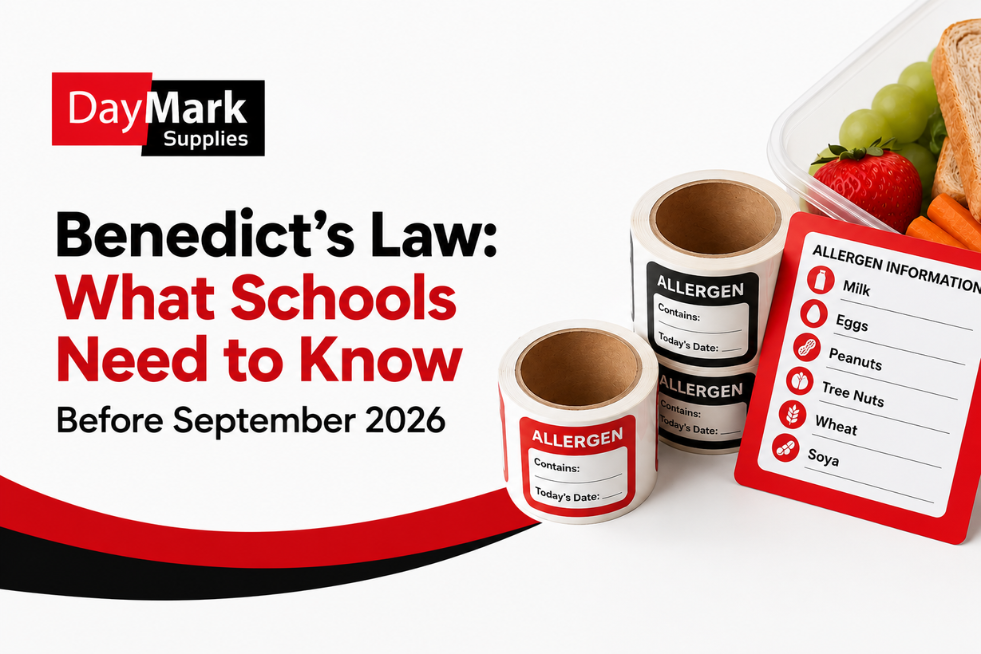
From September 2026, schools across England will be required to adopt stronger allergy safety measures under the new statutory guidance known as Benedict's Law.
The changes represent one of the most significant updates to allergy management in education settings in recent years, placing greater emphasis on staff training, emergency preparedness and clear allergen communication to help protect pupils with food allergies.
What is Benedict's Law?
Benedict's Law is a campaign-driven initiative introduced following the tragic death of five-year-old Benedict Blythe, who died from anaphylaxis after being mistakenly given food containing milk despite having a known allergy.
Benedict's family, alongside allergy charities, healthcare professionals and campaigners, worked tirelessly to improve allergy safety standards in schools and ensure that no other family experiences a similar tragedy.
In 2026, the Government committed to introducing mandatory statutory allergy guidance for schools in England, with implementation beginning in September 2026.
What Will Change for Schools?
Under the new guidance, schools will be expected to demonstrate a consistent and proactive approach to allergy management.
Key requirements include:
1. A Whole-School Allergy Policy
Schools will need to develop, implement and publish a dedicated allergy policy outlining how allergens are managed, how risks are reduced and how allergic emergencies are handled.
2. Annual Allergy Training for All Staff
All staff members - not just first aiders - will require regular allergy awareness training. This includes teachers, teaching assistants, lunchtime supervisors, office staff, transport staff and any other adults working within the school environment.
Training should cover:
-
Recognising the signs of allergic reactions and anaphylaxis
-
Understanding common allergens
-
Emergency response procedures
-
The correct use of adrenaline auto-injectors (AAIs)
3. Spare Emergency Adrenaline Auto-Injectors
Schools will be expected to hold in-date spare adrenaline auto-injectors on site to provide emergency treatment where required.
These devices can be lifesaving in situations where a pupil's own medication is unavailable or additional doses are needed.
4. Individual Healthcare and Allergy Action Plans
Children with diagnosed allergies should have personalised care plans in place, ensuring that all relevant staff understand their specific needs, triggers and emergency procedures.
Why Food Labelling Matters More Than Ever
For school kitchens and catering teams, accurate allergen communication is a critical part of allergy management.
Clear, consistent food labelling can help reduce the risk of mistakes, improve communication between kitchen staff and front-of-house teams, and support schools in meeting their duty of care.
Simple measures such as using dedicated allergen labels, colour-coded systems and clear identification of special dietary requirements can make a significant difference to pupil safety.
How DayMark Supplies Can Help
At DayMark Supplies, we understand the challenges schools face when managing food allergens and maintaining compliance.
Our range of food safety and allergen labelling solutions is designed to support busy education catering teams by helping them:
-
Clearly identify allergen-containing foods
-
Highlight special dietary requirements
-
Improve organisation and consistency
-
Reduce the risk of labelling errors
-
Strengthen food safety procedures
Whether you're reviewing your existing processes or preparing for the September 2026 changes, having effective labelling systems in place can help support a safer dining environment for every pupil.
Preparing for September 2026
Although implementation begins in September 2026, schools should start preparing now.
A practical checklist includes:
✓ Review current allergy procedures
✓ Develop or update your allergy policy
✓ Arrange staff training
✓ Ensure emergency medication protocols are in place
✓ Audit your catering and allergen labelling processes
✓ Introduce clear food identification systems where required
Final Thoughts
Benedict's Law marks an important step forward in protecting children with food allergies in schools across England.
By combining robust policies, effective staff training and clear allergen communication, schools can create safer environments for pupils and provide greater reassurance to parents and carers.
For education caterers and school kitchens, now is the ideal time to review existing systems and ensure you're ready for the changes ahead.
At DayMark Supplies, we're committed to supporting schools with practical food safety solutions that help make allergen management clearer, simpler and safer.
Sources
-
UK Government. Stronger protections for children with allergies in school. Available at: https://www.gov.uk/government/news/stronger-protections-for-children-with-allergies-in-school (Accessed June 2026).
-
Anaphylaxis UK. Benedict's Law. Available at: https://www.anaphylaxis.org.uk/education/benedicts-law/ (Accessed June 2026).